Following our journey through the senses, we look at Touch.
This is a sense familiar in all cultures but perhaps valued differently in various regions. In the west, we are not known for being great huggers and our private space is greater.
Post-Covid we are even more conscious of our closeness to others; perhaps less likely to take a proffered hand or offer a cuddle to someone in distress.
As early as the 1950s, psychologist Harry Harlow drew attention to the importance of touch in his studies of baby monkeys.
Today we have new examples around the world, demonstrating the importance of touch, in the stories of the elderly dying behind screens and relatives being deprived of holding hands at a bedside.
Is it necessary to reflect on these changing times in our writing?
Sadly, I guess it must make a difference.
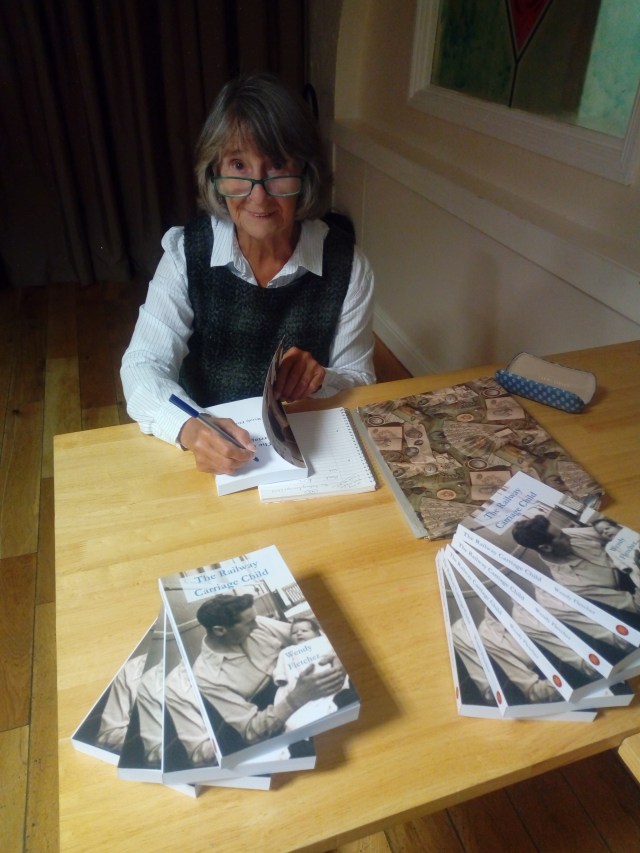
In my first book, The Railway Carriage Child the characters live in a relatively safe era. The threat of the plague has gone. Cholera, which wreaked havoc in my home town in the not too distant past, had receded and Covid was yet to arrive.
My second book, still in the writing stage, Goodbye Bluebell, was planned before covid so I will carry on with the story that ends in July 2018. These characters will not be affected but I wonder how we are going to handle this in future.
Are our student characters going to be sitting in their family home and not partying with their housemates?
Are our younger children to be home-schooled?
Are our nurses’ and doctors’ eyes going to meet over a mask instead of a coffee?
It will be interesting to see where authors take this, but hopefully, we will be back to some sort of normality soon and the paragraphs where my main character is held in a tight embrace by her new lover won’t seem terribly dated before they even reach the book shops.
This month I am taking a look at TASTE and how it can be incorporated into our writing as we paint a picture of our characters. Taste can, of course, have more than one interpretation. A character might have a questionable or excellent taste in clothes/boyfriends but today I’m focusing on the physical sensation we feel when a flavour reaches our taste buds. How can we use this to enhance a scene and capture the reader’s attention?
We can begin to form an image in our mind as we meet the newly converted teenage girl as she screws up her freckled nose in disgust and makes a gagging sound at the same time.
‘There’s bacon in this quiche, Mother. Didn’t you even check the label?’
This leads us to meeting her mother as she sighs, remembering the days when her daughter would join them in a Sunday morning fry-up and devour her sausages, bacon and black pudding with the enthusiasm of a hungry child. When did that lovely child become the obstinate, complaining teenager of today who preached her new beliefs to everyone and always seemed to hold the moral high ground?
In my first book, The Railway Carriage Child, I commented on my frustration when I asked for a blue toffee and was given one in a blue wrapper. Didn’t the grown-ups realise I meant the one that tasted blue?
It was many years later that I came across the term, Synesthesia, translating from Greek to mean ‘perceive together’. I read on with amazement. It was explained as an ability to experience a sensation in more than one way. It described people who could taste music or hear colours. Apparently it is to do with wiring in the brain and is found most often in those with artistic ability and increased intelligence. I loved it. But reading on, I learned that it was quite common in childhood but often petered out in adulthood…and I had to admit that I hadn’t tasted a blue toffee for years.
It did inspire me to think that it could make an appearance in the novel I am writing at the moment, Goodbye Bluebell. I have a character who is an artist. Perhaps he could also be a synesthete…what fun he could have painting all those musical notes and hearing the colours in his palette.
Next month I will take a look at the sense of TOUCH
In the last post we looked at the role of HEARING when we are trying to capture the attention of our readers. This time we will explore the sense of SMELL –often said to be the most emotive of all the senses.
The following is an excerpt from my biography, The Railway Carriage Child, which I quote because it illustrates how familiar smells can stay with us beyond the moment, beyond childhood, always taking us back to the origin of that first memory.
On Christmas morning, whatever the weather outside, the one bar of the electric fire already glowed, switched on in the bedroom before I woke. I leapt into the middle of my parents’ bed and my pillowcase-sack was dragged onto the foot. One of the clearest memories I have from this time is of the blend of aromas that came from that sack. Before I opened anything I could anticipate the contents just by breathing in.
As I unwrapped bath cubes and talcum powder, there came irony. They were scented to evoke memories of special summer moments in a country garden but, for the whole of my grown-up life, I have stood in such gardens and the image in my mind is of a tin of honeysuckle perfumed talcum powder on a cold Christmas morning.
The second passage is taken from my forthcoming first novel, Goodbye Bluebell.
They reached the door and James pushed it open, half turning to let her go first. He took a step forward without being as careful as he might have been.
On the other side, about to leave and assuming that a gentleman would step aside to let her pass, a young lady of about Isabel’s age, took the full force of the door in her face. Reeling backwards, she teetered for a second on her high heels, then landed squarely on her bottom in a heady cloud of Coco Chanel.
Again this smell lingers in the mind of our character, Isabel, and will come back in a later chapter to let the reader know that this brief meeting was not a one-off.
Other ways in which a smell could be a thread through a story, are: an unpleasant smell that might lead to an unsavory find, a desire to preserve a precious memory where a particular scent played an important role, such as a deceased grandmother’s perfume or an absent father’s aftershave, or the smells that lead us into temptation – perhaps the vegetarian who fights with her conscience as she waits for friends at the hot-dog stall.
We are all familiar with the theory that freshly brewed coffee on viewing day, leads to an increased chance of a house sale, so let’s be aware of how our characters and surroundings are affected by smells and share this with the reader.
The next post will look at TASTE
On another note:
I am excited to tell you that one of my short stories has been chosen for the August Story Chat on Marsha Ingrao’s Always Write blog, which is being hosted this month by Cathy Cade. You can read it at
This is a site where your work can be showcased and readers can comment. This feedback is very helpful and I’m glad to say that all the comments so far have been positive. I would recommend submitting some of your own writing to test out the response.
A lot of what we read (and write) is description of what the characters see. We call it ‘setting the scene’ or ‘backdrop to the story’. The other senses are often overlooked or not used in the best way to promote our understanding of the characters.
In the next few posts I will be looking at how we can incorporate the other senses to tell us more.
Today we will look at HEARING.
‘As Alison came in from the garden she heard music playing. The radio was plugged into the socket nearest to the kitchen door. Its wire stretched across the hall. Balanced on the bottom step of the stairs to the attic, it sent waves of 1960 into the air and up the narrow staircase.
‘Gold.’ She shook her head. How could her sister, just two years older than herself, have such an ancient taste in music?’
We now know we have two sisters, quite close in age but with very different taste in music.
We might conclude that Alison is the more cautious as she notices the wire across the hall, whilst her sister is oblivious to the trip-hazard.
Might we question what the elder sister is doing in the attic? She is obviously planning to be there for some time as she has organised background music.
Are we looking at an old house, possibly with a separate staircase leading from the kitchen to servants’ quarters in the attic?
Our attention is caught.
Will Alison change the station to the type of music she prefers?
Will she climb the stairs to join her sister?
Is there a link between the era of the music and the trip to the attic?
Will she be worried by her sister’s preoccupation with the past?
So much of the story may evolve to explain a sound that might just have been written as ‘music was playing’.
Look for opportunities to sow these seeds through the senses.
Next time we will take a look at the often evocative sense of smell.
As my novel takes shape (slowly), I am still enjoying ‘meeting’ new characters. This is perhaps one of the most exciting aspects of writing. It feels like making a new friend who will accompany you on a journey. Of course, this may be a short journey with minor characters but some of the more central figures may be joining you for the rest of the story; giving you chance to get to know them well. Is she the sort of person you would trust with your password, is he the sort of person you would trust with your daughter?
With every written word you are inviting the reader to come along on this journey so you must keep them safe too. You don’t want them to be disappointed when a character does something that doesn’t seem likely, unless that’s a deliberate ploy to shock them.
They, too, will feel for the characters and try to understand what makes them ‘tick’. That makes it vitally important that you know. Why is that character so loud and bossy. Is he just a bully or is he covering up some insecurity? Is she really just very shy or is she hiding some secret behind that coy expression?
The last character I introduced was an ex-wife. We didn’t know her when she was married but we have heard the husband’s side of the story. We meet her as she sits brushing her hair at the mirror and reflecting on where life is taking her. Was she really the victim of an unfaithful husband or the villain who had got what she deserved?
Now I have another newcomer in which to invest some thought. She is young and pretty and I might give her freckles but don’t get too fond of her because, sadly, she won’t be with us for long as she’s heading towards an early death in a car crash that will have repercussions many years down the road for a number of the central characters.
I will share with you a few more musings as the shape of this work comes into focus and hopefully inspire you to start thinking how you could build a character of your own and enjoy getting to know them.
As we head out of lockdown and start to plan summer outings I am sitting out these last (hopefully) weeks by reading the few remaining books that I stockpiled at the beginning of our enforced stay-at-home.
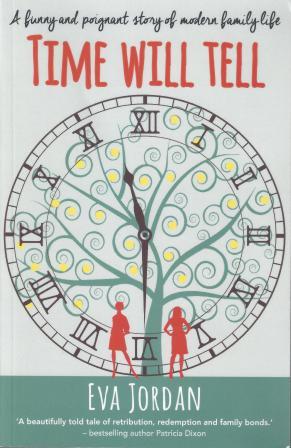
This week I have finally managed to read the last of Eva Jordan’s trilogy. I had read the first two books, 183 Times a Year andAll the colours in betweenwhen they first came out but it was easy to pick up the story as each book can be read as a stand-alone story.
Meeting the Lemalf family again was like meeting up with old friends; the characters so life-like that I wanted to ask all the usual catch-up questions.
I wanted to know how mum and step-mum, Lizzie, was coping with her grown-up children. Does it really get easier as they get older, or maybe harder?
How had the dimensions of this enchantingly dysfunctional family changed?
This third book, Time will Tell, gives us the answers but raises more questions as we visit them in the quiet fenland market town that has been their home for the series.
Earlier mysteries are revisited and we come to understand how the hidden past of an older generation are still impacting on Lizzie and her blended family.
For the first time we join Lizzie as she explores the less familiar world of 1960s London where the Krays were not the only villains lurking in the shadows.
How did such unsavoury characters from the past come to be instrumental in the functioning of a modern fenland family?
Eva Jordan leads us through the latest developments with her usual mix of humour and insight.
Highly recommended for these last days at home, or to pack as you head off on holiday.
This book and all Eva’s books are available on Amazon.
As we continue in lockdown and feel even more isolated by the snow that has recently marooned us indoors, it feels like a good time to remember past holidays when the sun shone and we enjoyed the freedom of travel:
Paddling
Stop the bus – I want to get off
It was the 1970s when my eldest daughter was still a toddler. I was a single parent and dreams of a holiday looked doomed to stay just that – unaffordable dreams. Then I met Glenda at the gate of nursery.
She was a single parent too. She had two boys, both under five – and I thought my life was hard.
We struck up a conversation and a friendship. I quickly realised that she was much more optimistic than me. I saw obstacles and she saw opportunities. I saw holiday brochures and cringed. She bought a tent.
Caught up in her enthusiasm, I was talked into camping. After all, why shouldn’t two perfectly sane ladies be able to enjoy a week under canvas with three wild animals, oops, sorry, three delightful under-fives.
No reason at all so I bought a tent too.
I bought a few holiday essentials for my daughter; tee shirts, shorts and canvas beach shoes. Then I treated myself to a pair of snazzy striped canvas shoes; blue and white. When I showed them to Glenda she just burst out laughing, great minds and all that, she had bought an identical pair.
She laughed even more when she saw my solution to that particular problem; not wanting us to get them mixed up I had put my initials in mine. That seemed logical to me and I didn’t see what was so funny and she wouldn’t tell me.
I didn’t get the joke until we took them off to paddle and there they were, side by side at the edge of our towels – her pair of size nines and my dainty size fours.
The wait for the end of term had been a long time coming and I was afraid the weather might break before we went but, finally, it was the day of departure and the sun still shone on us as we walked to the bus station. Isn’t it amazing how much luggage will fit into two buggies?
A tent, two tightly rolled sleeping bags, changes of summer clothes, woolly jumpers and wellingtons just in case, and a toddler balanced on top to secure the load.
We were off to Skegness and the kids started their rendition of ‘Can we go to the fair?’ as soon as they saw the Butlin’s camp.
We had not foreseen this problem as we didn’t know that the bus dropped off and picked up passengers there. We had budgeted for a Butlin’s day ticket so they could enjoy the thrill of the rides without actually staying there. We were camping a mile further on, at a much less exciting venue.
Our entertainment had to be self-made; beach games, sand castles, picnics, chips on a bench for supper.
Every morning the cry went up from one or another shrill little voice, ‘Is it today we can go to the fair?’
We had booked it for the last day of the holiday to savour the anticipation but each day the call became more plaintive.
On Monday we patiently explained the character building benefits of delayed gratification. On Tuesday we just said ‘You’ll have to wait.’ Wednesday was dismissed with a curt, ‘Just wait, will you?’
By Thursday it was a frazzled ‘I am sick of telling you to wait…’
It was Friday before Glenda finally resorted to the threat, ‘If you mention fair again, you won’t be going.’
Saturday dawned bright and sunny. We had all slept well and we hadn’t heard the word ‘fair’ for nearly twenty-four hours.
Enjoying the seaside
I think the kids thought the wait was worthwhile as they didn’t even complain on the way. With the buggies free of the luggage, they were able to walk a bit and ride a bit.
They made full use of the ticket, trying everything at least once. On the way back they were contentedly quiet and we knew we had scored a success.
Next day we packed, loaded the buggies and trotted to the bus stop for the latest bus that would take us home. What good parents we were, and what lovely children. They were still talking about what a wonderful time they’d had. When they asked if they could all sit together on the long bench seat at the top of the stairs, we were happy to leave them there and made our way to the front of the top deck.
The bus stopped again at Butlin’s and both decks filled up. We were sitting right next to the fair. I’m sure there was a little boy about to burst but we were unaware of this volcano of excitement until he could finally contain the words no longer.
Then the little voice squeaked out over the heads of twenty or so passengers: ‘Mum, you know that word beginning with F that we’re not allowed to say…’
I know it wasn’t my daughter because she couldn’t spell but, none the less, Stop the bus – I want to get off.
Wishing everyone a happy new year seems a little ironical this month as we head towards the threat of tighter restrictions, so perhaps a wish for a productive new year would be more appropriate.
During the coming months I will try to put forward some ideas to make us all feel more positive about our achievements, however small they might appear.
As writers we often have to wait patiently for recognition of the merit of what we have produced.
That’s one of the advantages of belonging to a writing group such as ours. You know that feeling: it’s one in the morning and you have just finished the last thousand words of your masterpiece or put the final twist at the end of your latest short story. But what now?
Family don’t always share your enthusiasm, (especially if they have just got to sleep or have an early start in the morning).
Friends can sometimes muster a word of congratulations but sometimes is not always right now.
So, who’s likely to be burning the midnight oil? Who is likely to share and understand your euphoria? Who has experience moments like this?
Of course, it’s your fellow writers.
They know the frustration of trying to find a receptive audience for your new baby and the long waits for shortlisting. They have probably known the angst of demands for rewrites and rejection letters bouncing through the letter box.
So, if you are writing or planning to write or even just trundling through lockdown with the seed of an idea fighting to surface, do seek out other like-minded people. Even if you can’t meet in person at the moment, it’s good to know someone supportive is there at the end of a phone line.
Must go now. I need to share the news that I’ve written a blog post before midnight.
Next month… I will be looking at how we plan (or don’t plan) our writing time.
Just an afterthought if you want a challenge:
We try not to pad out our writing by adding unnecessary words but those who might know better do not always conform to this idea. Perhaps you can find an example?
This one was on BBC Radio 4 this morning:
It was only a very short meeting with Dominic Cummings, ten minutes in length.
Might we have imagined that it was ten minutes in width or ten minutes in height?
As Christmas approaches, we look back on a strange year of lockdowns, social distancing and self-isolating.
A year ago these were terms that had never entered the vocabulary of most of us.
All of the above have touched our lives in one way or another.
Our local creative writing group has had to adjust quickly to the challenges of meeting, not in person, but on Zoom, another word new to most of us.
It is against this backdrop of change and uncertainty that some of our members have managed to publish their work.
Over the next couple of months I will review some of these successes.
At least the rules imposed on us have given us time to reflect on how we structure our day.
No more browsing in the stores or lingering over a social drink has led to an increase in time for reading.
I have enjoyed some cozy evenings this week, snuggled up in a fluffy dressing gown with a hot chocolate and a good book.
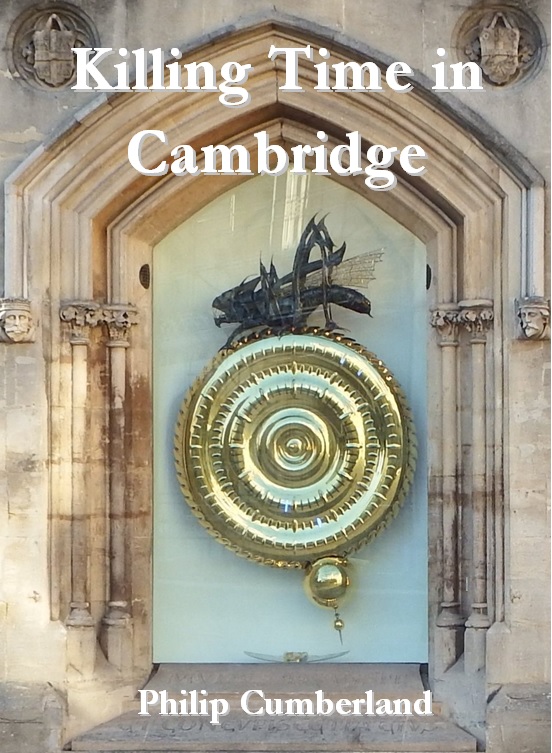
My good book for this week has been KILLING TIME IN CAMBRIDGE, by group member Philip Cumberland.
Killing Time in Cambridge
This is Philip’s first success in publishing but I’m sure it won’t be his last.
Along with Arnold, a seasoned Detective Chief Inspector based in Cambridge, we are taken on a journey through the mysterious and sometimes treacherous fens.
We meet characters who pose a real threat to Arnold and his loyal team and we are on the edge of our seats as the plot unfolds.
The insight into how a case is investigated is well researched and the twists and turns hold our attention to the last page.
A look into science, forensics and a very strange computer are entwined with the human side of the police force and could there even be a hint of a romance developing?







 Wendy Wordsmith